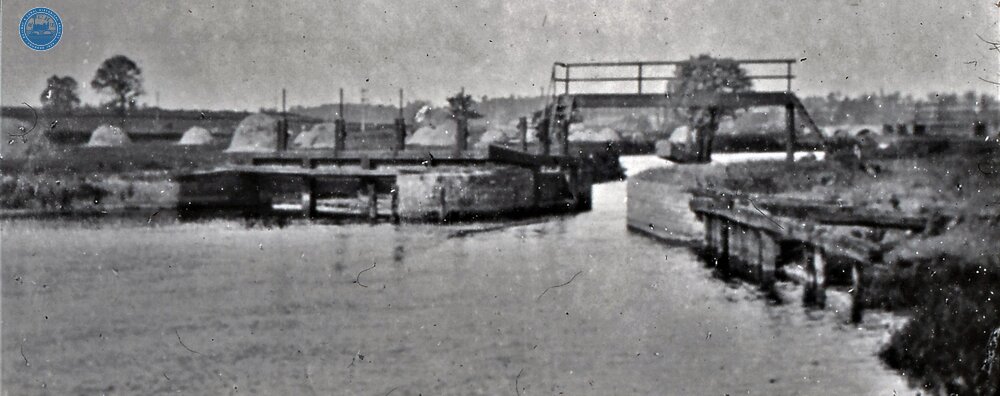
captioned "Sluice gates & Flash lock". Simply from the photo I think this is more likely to be "Sluice gates & Flood gates". Flood gates operate to protect a navigation's infrastructure from flooding but may block a vessel's passage. Flood locks operate like ordinary locks but only in flood conditions when a significant level difference has to be maintained. A flash lock with mitre gates would have been very difficult, if not impossible to operate. There is also a reference to a viaduct in this photo. I don't think it is. The 'arches' of the 'viaduct' are middle ground hay stooks like those in the foreground and, if it were a viaduct the proportional widths of arch to pier would be very odd.
Patrick Moss: on 06 August 2025
Ref Flash Locks and Mitre Gates - The flash locks on the River Tone in Somerset (known locally as half-locks) had mitre gates, so it did happen However I don't recognise this as being one of them.
The flash locks on the Warwickshire Avon had single gates which must also have been difficult to open against a head of water - I believe winches were used
Patrick Moss: on 10 August 2025
I sought the views of Ivan Kane, who has done much research into flash locks - this is on the River Great Ouse, on that system there were a number of flash locks that had mitre gates (some had guillotines
The Great Ouse System was to leave flash locks open, and close them to create a greater depth of water upstream when needed, rather than to leave them closed and breach a head of water
Patrick Moss: on 15 August 2025
Further information from Ivan Cane states that this is Tempsford Staunch on the Great Ouse - there is no lock on the site now
Keith Noble: on 06 August 2025
Patrick Moss: on 06 August 2025
The flash locks on the Warwickshire Avon had single gates which must also have been difficult to open against a head of water - I believe winches were used
Patrick Moss: on 10 August 2025
The Great Ouse System was to leave flash locks open, and close them to create a greater depth of water upstream when needed, rather than to leave them closed and breach a head of water
Patrick Moss: on 15 August 2025